Kaiten is open source, under Apache 2.0
As of today, the whole Kaiten repository is public under the Apache 2.0 license, and so are our SDKs and our CLI. What's in it, why Apache 2.0, and what comes next.


October 1, 2026 • 5 min read • Alexandre Bergère
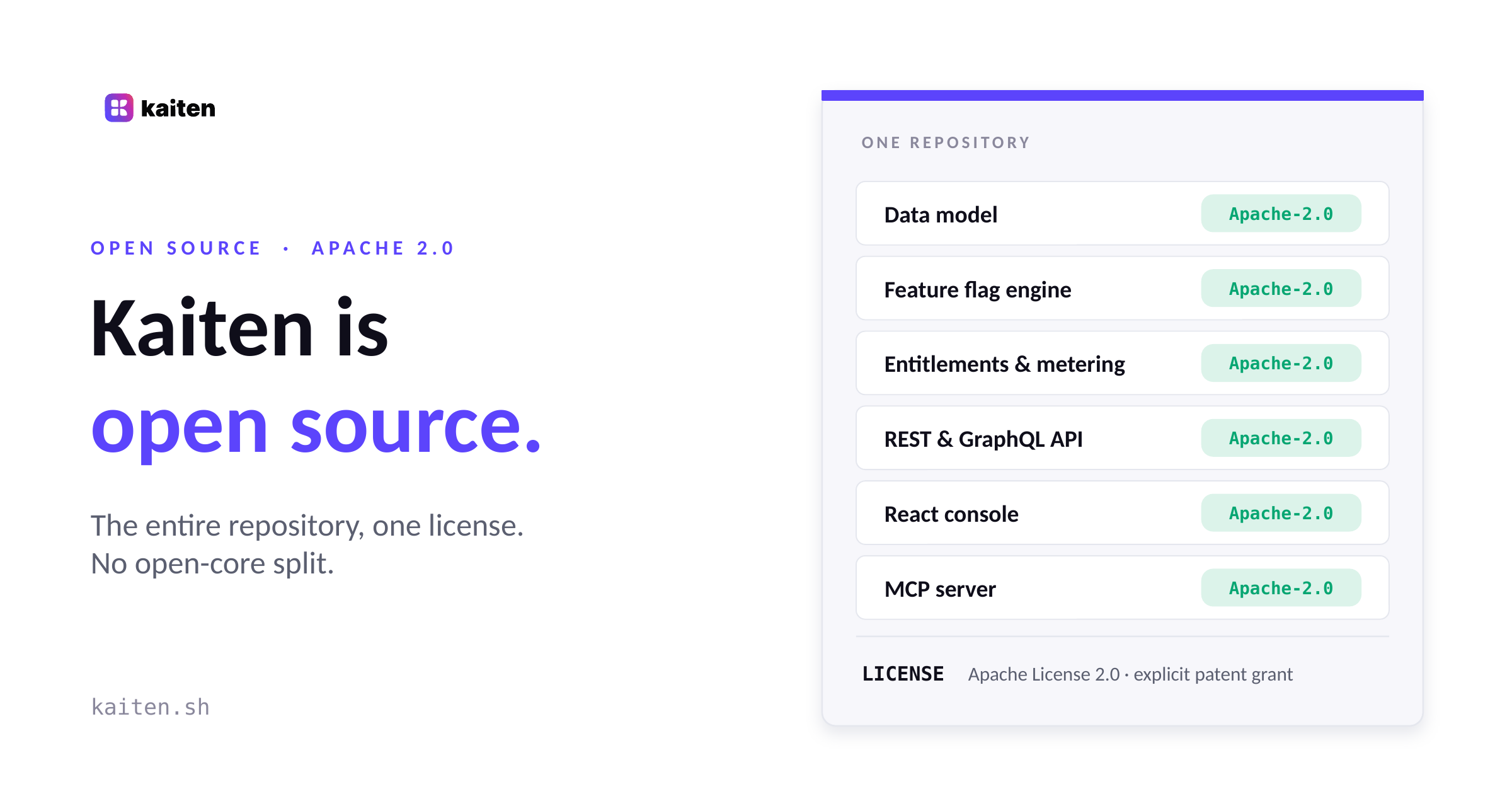
Kaiten is open source as of today. The whole repository is public under the Apache 2.0 license, and so are our three SDKs and our CLI.
What Kaiten is
Kaiten is a control plane for B2B SaaS. Every B2B software company keeps three things in separate systems: what a customer bought, what they can access, and what runs for them. Kaiten connects the three in one data model — organizations, customers, instances, licenses and entitlements — with feature flags, usage metering and the deployment topology attached to it.
Your product reads that model over REST, read-only GraphQL or OpenFeature's OFREP protocol, and your team works in the console or the CLI. A signed contract becomes a license, the license grants entitlements, and the server enforces the limits they set.
Why we built it
We are four engineers, all co-founders, at Station F in Paris. Each of us had already built this layer by hand in the SaaS companies we come from: a plan column on the accounts table, a cron job that reads the CRM at night, a billing webhook that sometimes arrives twice. Before writing a line of Kaiten, we asked dozens of founders, engineering leaders, product managers and account managers how they handled it. Every one of them had built it too, from scratch.
Kaiten is that layer, built once, as infrastructure. Infrastructure that holds a company's commercial truth has to be something its engineers can read, run and audit, so we are opening all of it. If you have ever owned that layer yourself, welcome.
Why Apache 2.0
We chose Apache 2.0 because it is permissive — use the code, change it, ship it inside a closed-source product — and because it carries an explicit patent grant: everyone who contributes licenses the patents their contribution relies on to everyone who uses it. That matters for the companies Kaiten is built for, which will embed a control plane in their own infrastructure.
The license covers the entire repository: there is no open-core split, and no directory under another license. Apache 2.0 is an open-source license, not a source-available one: nothing in it limits who may run Kaiten, or how.
Contributions come in under the license they go out under. We ask for a Developer Certificate of Origin sign-off on each commit, not a contributor license agreement, so you keep the copyright on what you write. The license covers the code, not the name: TRADEMARKS.md says how the Kaiten brand may be used.
Kaiten Cloud is how we make a living. We run this same engine for you — on shared infrastructure, or in a dedicated environment on Cloud Enterprise — and deliver its webhooks to your endpoints. Self-hosted, you consume the same events from the event pipeline.
What's in the repository
- The data model: organizations, customers, instances, licenses and entitlements, with components, releases and deployment zones.
- The feature flag engine: targeting rules written in CEL, progressive rollouts, and OpenFeature compatibility over OFREP — your OpenFeature SDK is the client.
- Entitlements and usage metering, with an immutable audit trail of who changed what: a person, a service account or the system.
- The API: REST, plus a read-only GraphQL endpoint.
- The React console.
- The MCP server, for agents.
- The event pipeline, and the Helm charts that deploy it all on Kubernetes.
The SDKs and the CLI live in their own repositories, under the same license: sdk-go, sdk-js, sdk-python and cli.
Getting started
The fastest way to see Kaiten is to run it. With Task, Docker, Go and Node 24 installed — the README lists them:
git clone https://github.com/kaitencloud/kaiten.git
cd kaiten
cp .env.example .env
task dev
task dev builds and starts the whole stack in Docker — database, API, event pipeline — seeds it with realistic fake product data and starts the console on localhost:3000. Log in as one of the seeded users with the dev auth switcher: no account with any provider is needed.
Then connect your product:
go get github.com/kaitencloud/sdk-go                     # Go
npm install @kaitencloud/server                          # Node.js
pip install kaitencloud                                  # Python
go install github.com/kaitencloud/cli/cmd/kaiten@latest  # the CLI
The self-hosting guide takes it to production, and the API reference documents the rest.
What comes next
This release is a beginning. In the coming days we will publish a video walkthrough, a getting-started playbook, updated documentation, and a longer piece on what we believe and where we are taking Kaiten. Releases will follow every two to four weeks. Kaiten Cloud, our hosted version, opens in a few weeks.
Come and build it with us
Issues, discussions and pull requests are open. Sign off each commit with git commit -s; CONTRIBUTING.md covers the rest.
Thank you to everyone who spent an hour with us in those discovery conversations and told us, candidly, how their own version of this layer worked and where it broke. Kaiten is better for every one of them.
— Alexandre Bergère, co-founder & CEO, Kaiten
The repository is open
The engine, its console and its Helm charts under Apache 2.0, with SDKs for Go, TypeScript and Python, and a CLI. Read it, run it, tell us what breaks.
You might also like
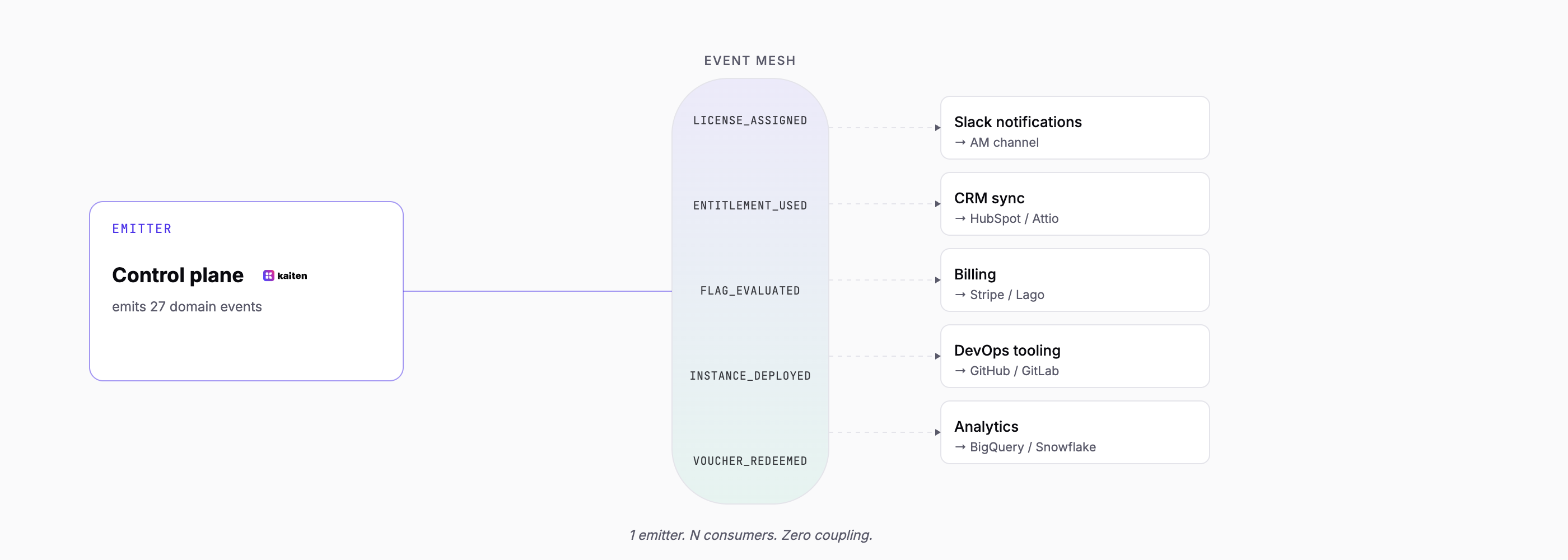
What is a SaaS Control Plane?
Every B2B SaaS over 50 enterprise customers ends up building the same invisible system. It's called a control plane — and understanding it is the difference between scaling cleanly and drowning in glue code.
May 6, 2026 • 16 min read
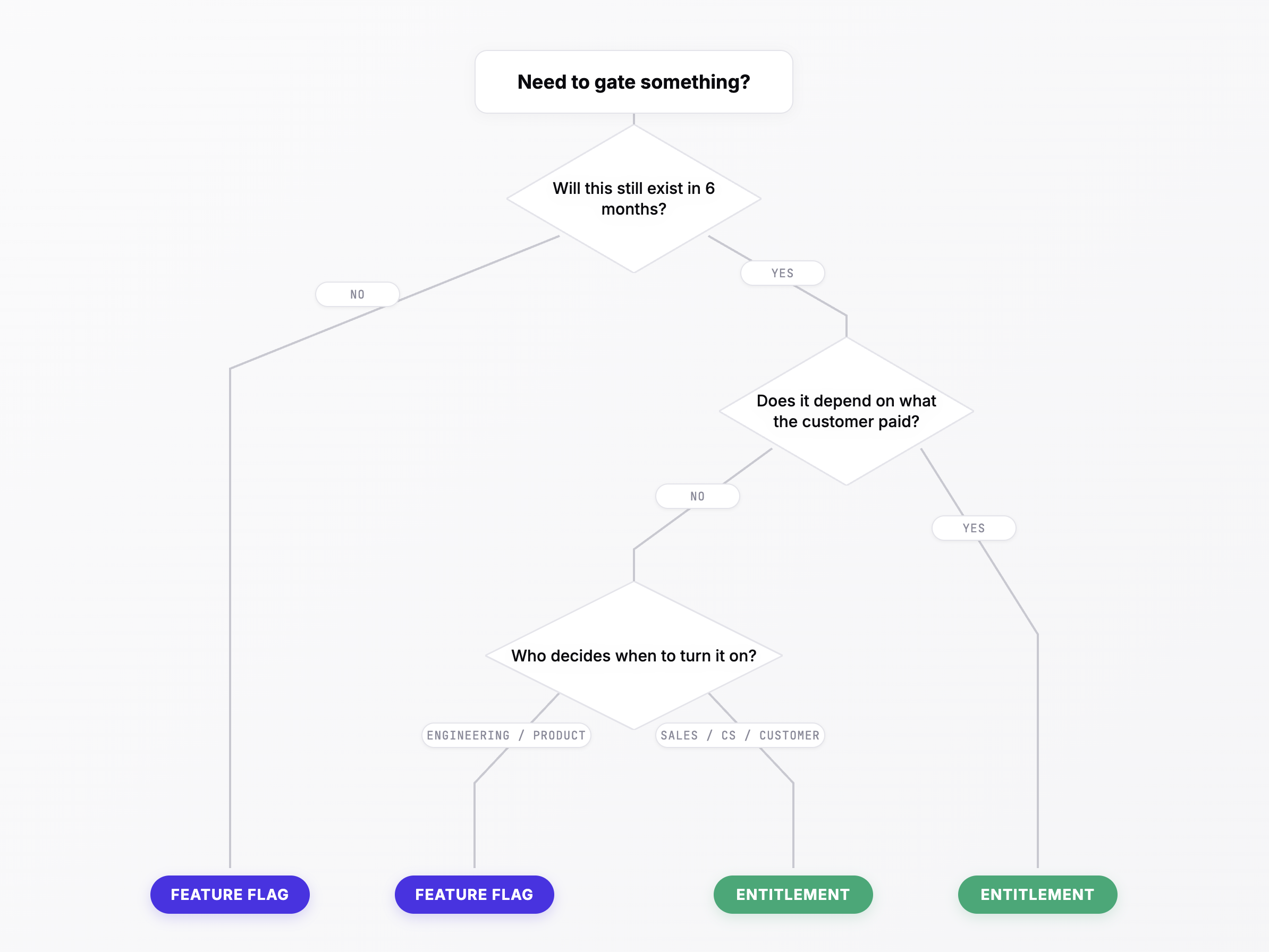
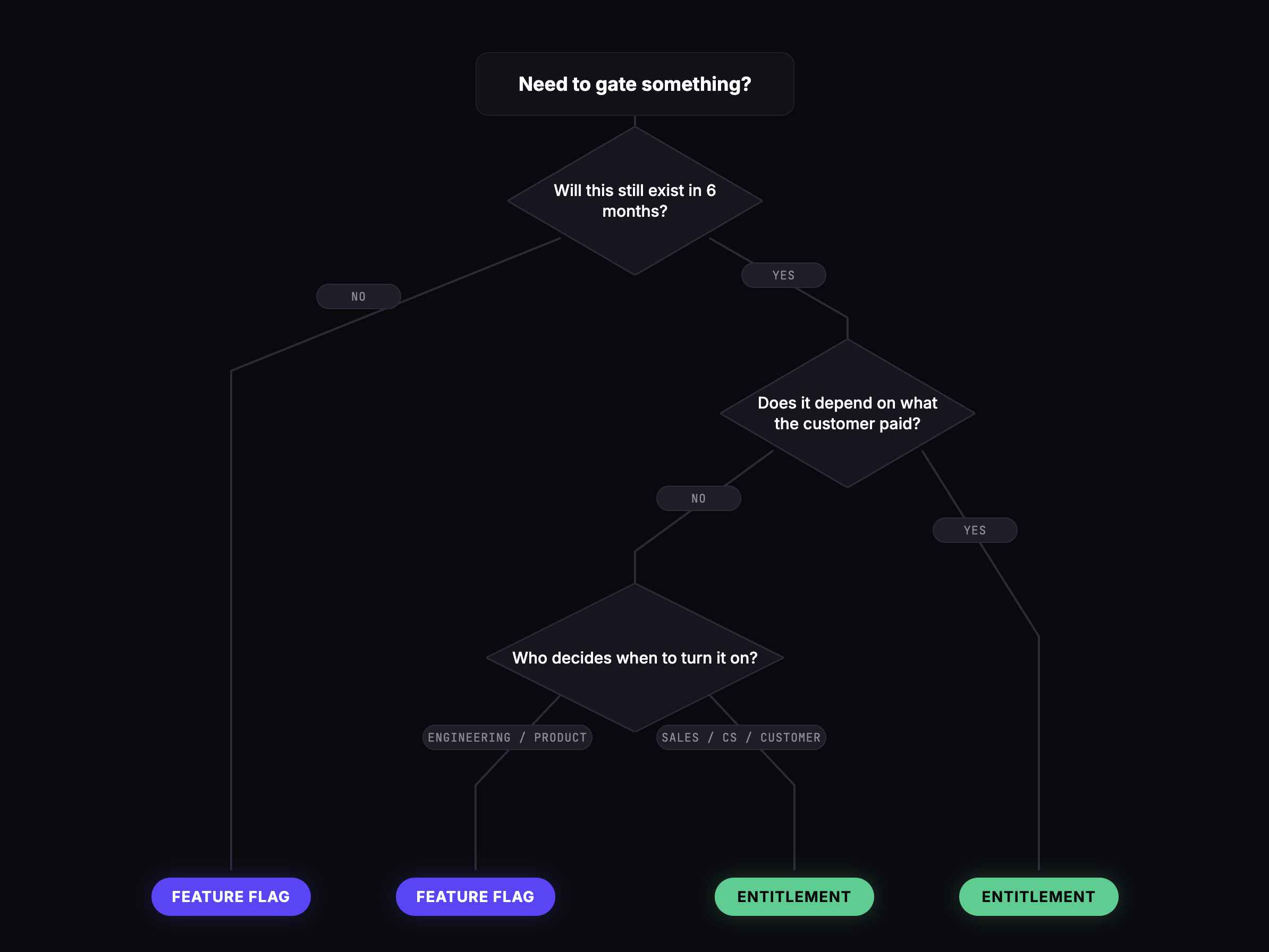
Entitlements vs Feature Flags — and why your SaaS needs both
They look similar. They both gate what users can do. But confusing the two is the single most common reason B2B SaaS teams end up with if (plan === 'enterprise') scattered across their codebase.
April 22, 2026 • 11 min read