Kaiten now bills, and your agents can run it
Native billing is live on Kaiten Cloud. The MCP server runs Kaiten from a chat or from Claude Code, access is decided by roles stored in Kaiten, and the React components are on npm at 1.0.


November 3, 2026 • 5 min read • Alexandre Bergère
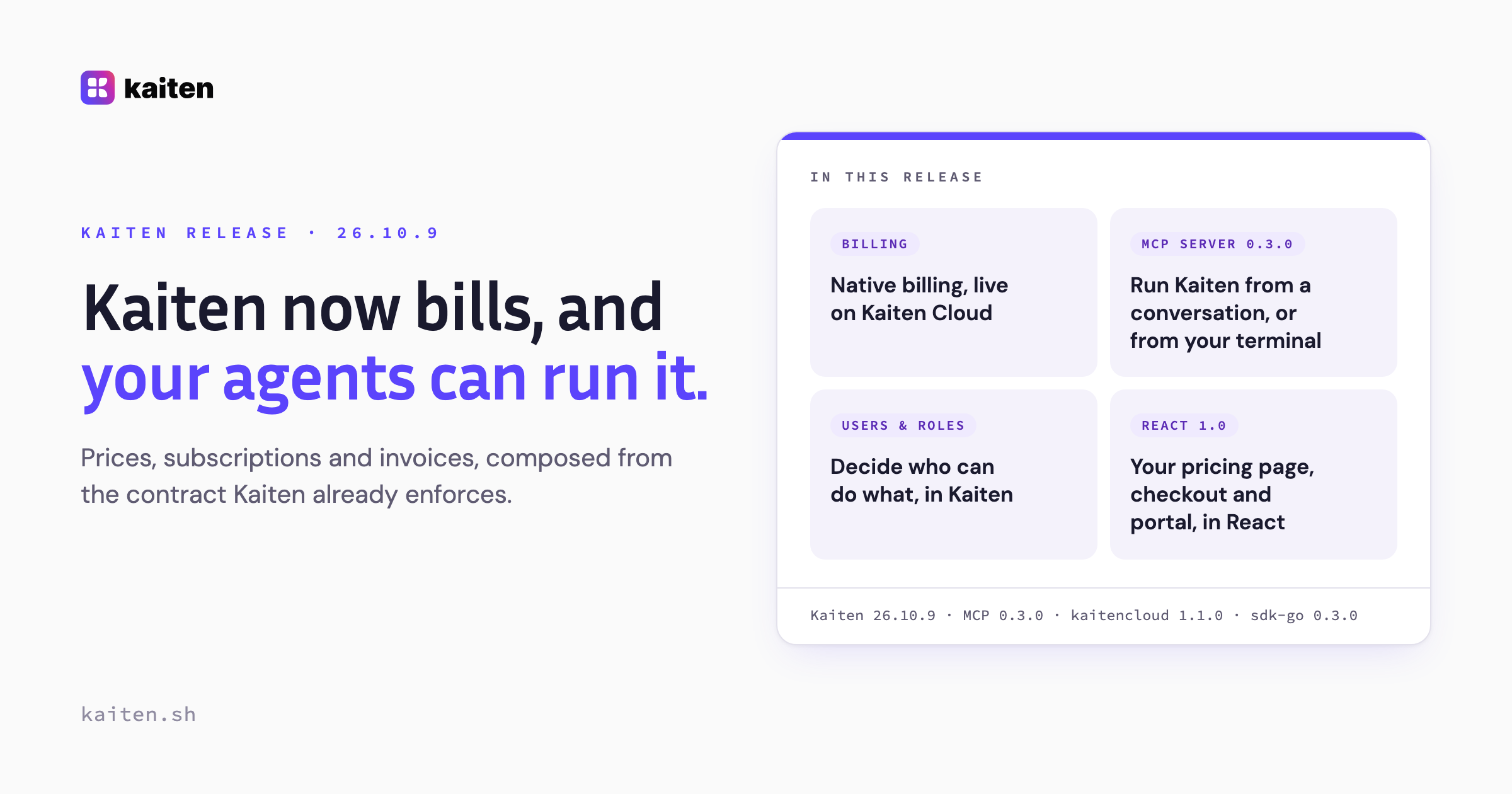
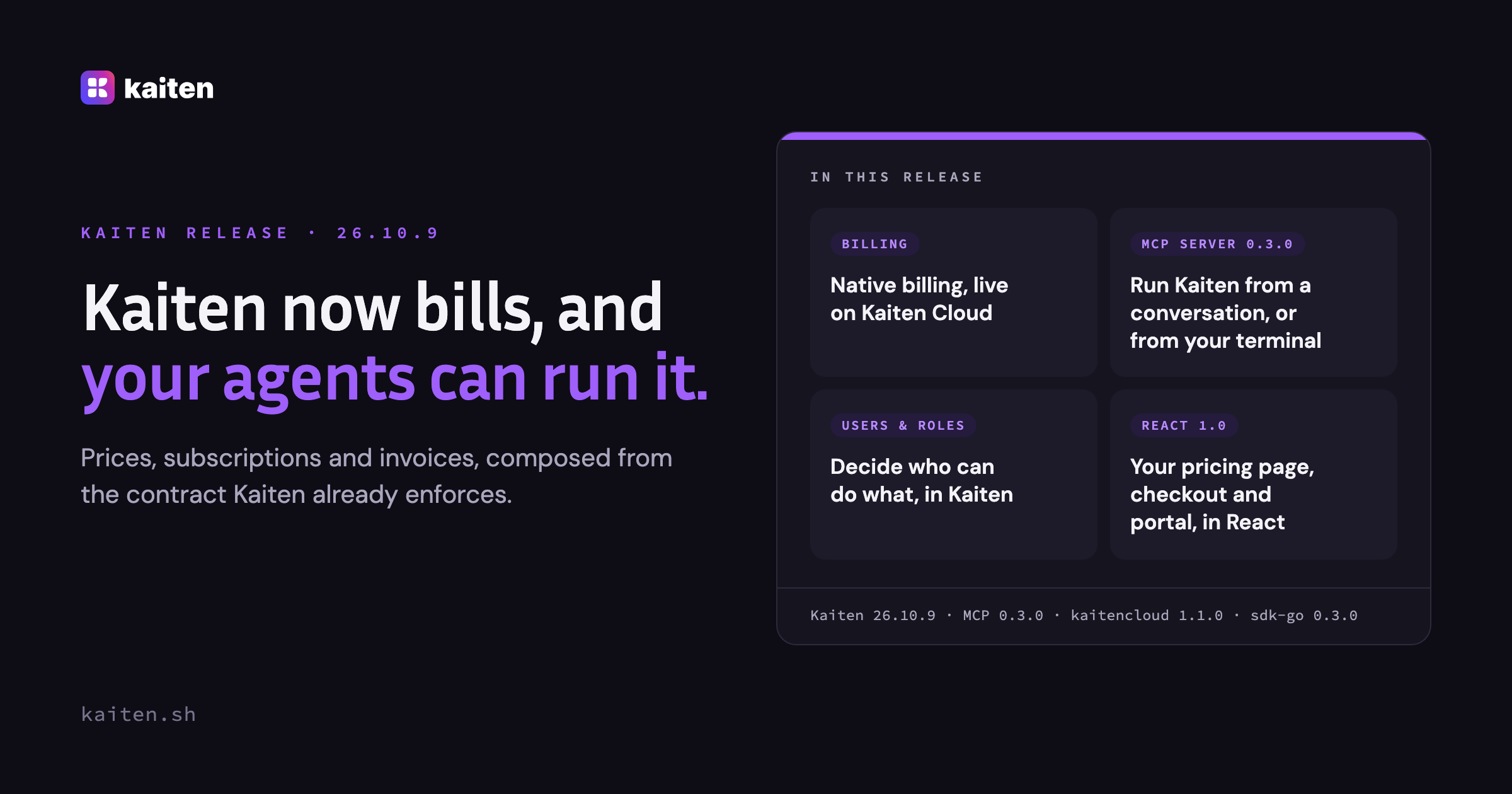
Since November 2, Kaiten Cloud runs Kaiten 26.10.9, and with it native billing: prices, subscriptions and invoices, built on the contract Kaiten already enforces. This release also brings the MCP server 0.3.0, roles that Kaiten stores for every person, and our React components, on npm at 1.0.
Native billing, live on Kaiten Cloud
Prices now hang on License versions: a flat fee per billing period, a price per unit of metered usage, or a rate for the usage above the grant. Each Instance has one subscription, started from the console, the API or a self-serve checkout, and Kaiten composes its invoices from those prices and the usage journal, add-ons and vouchers included. Kaiten is the reference for usage and for what each invoice contains; Stripe taxes it, sends it and collects it, and without a provider your accounting system takes it from a handoff queue.
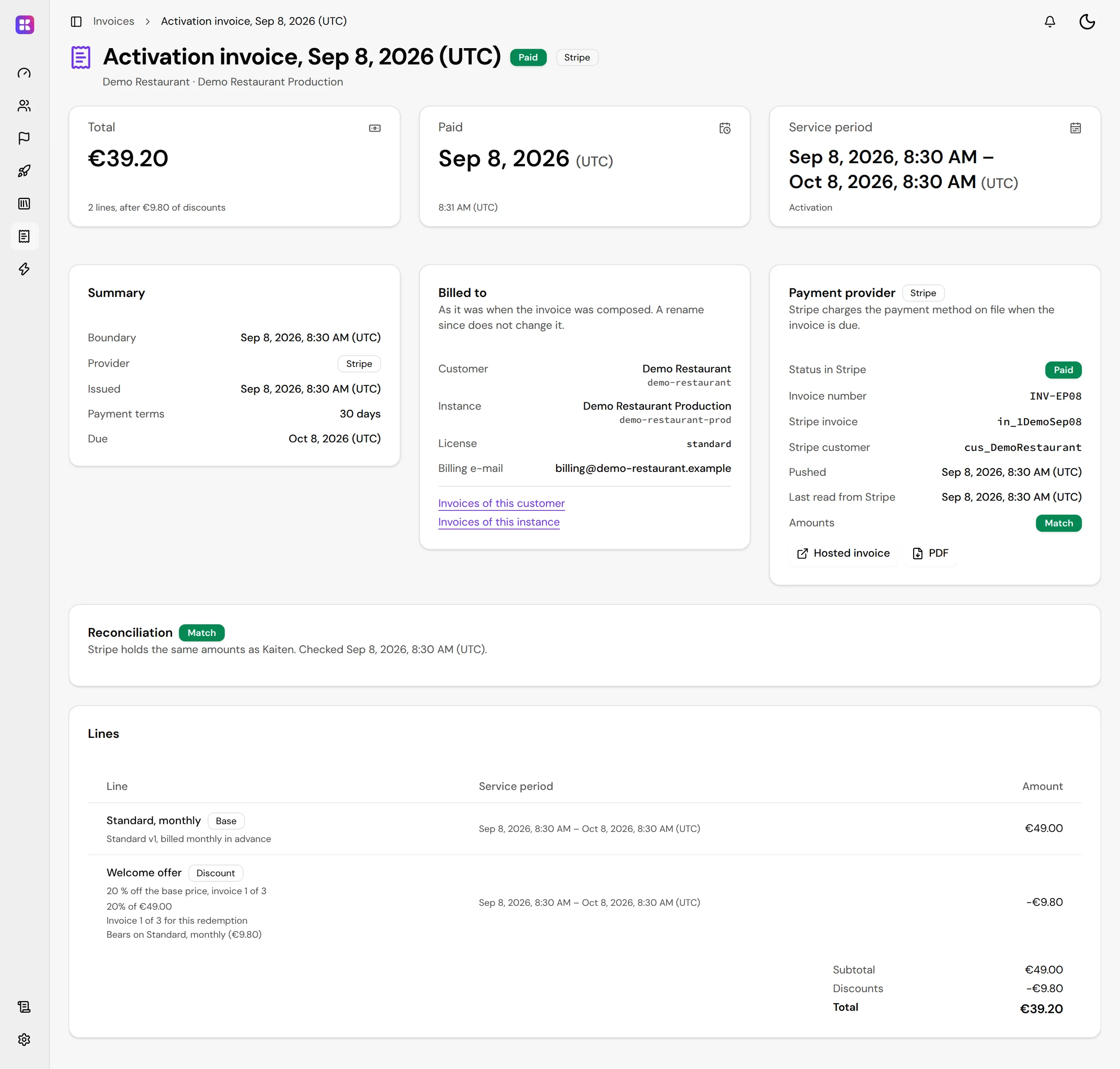
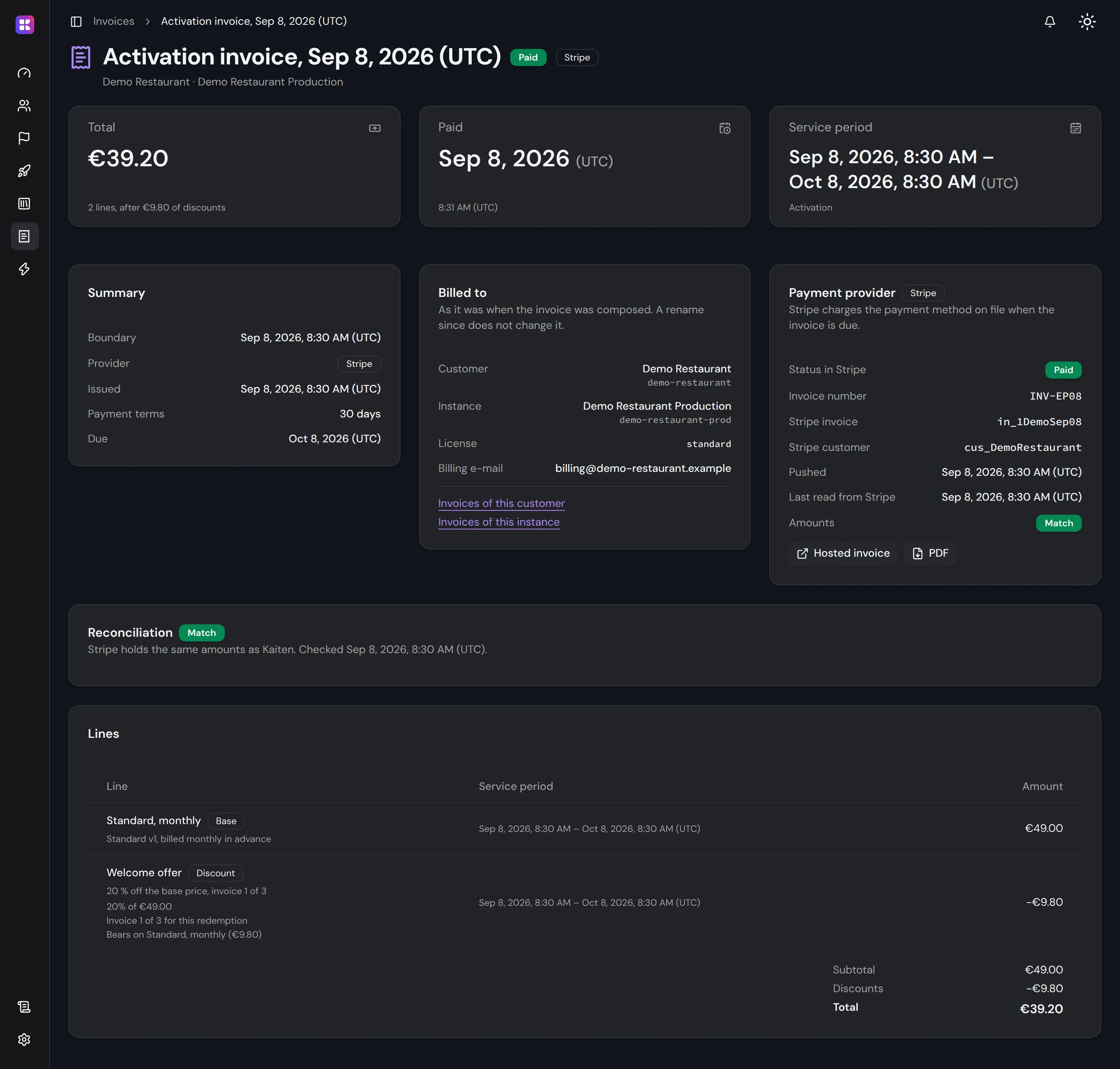
Read the docs → Monetization · Quickstart
Run Kaiten from a conversation, or from your terminal
The Kaiten MCP server 0.3.0 gives an AI agent 44 tools in Kaiten's vocabulary, 19 that read and 25 that write, now with billing and, on Kaiten Cloud, webhooks. It is open source under Apache 2.0, and it acts with the caller's own token, so every change it makes lands in the audit trail.
The same server works from Claude Code, next to your code:
The SDKs follow: sdk-go v0.3.0 and kaitencloud 1.1.0 cover the billing API, @kaitencloud/server covers every operation of the Core API, billing's included, and feature flags go through OpenFeature, with Kaiten's OFREP endpoint as the provider.
Read the docs → MCP Server · Deployments · SDKs · OpenFeature
Decide who can do what, in Kaiten
A person's access now comes from roles that Kaiten stores for each organization and reads again on every request, whatever the identity provider's token carries. Administrators edit roles and assignments in the console, under Settings › Users & roles: three built-in roles, custom roles with a level per resource, and direct scopes for one person. In each organization, the first person to sign in becomes its administrator, once; service accounts keep the scopes their tokens were issued with, and can never manage people.
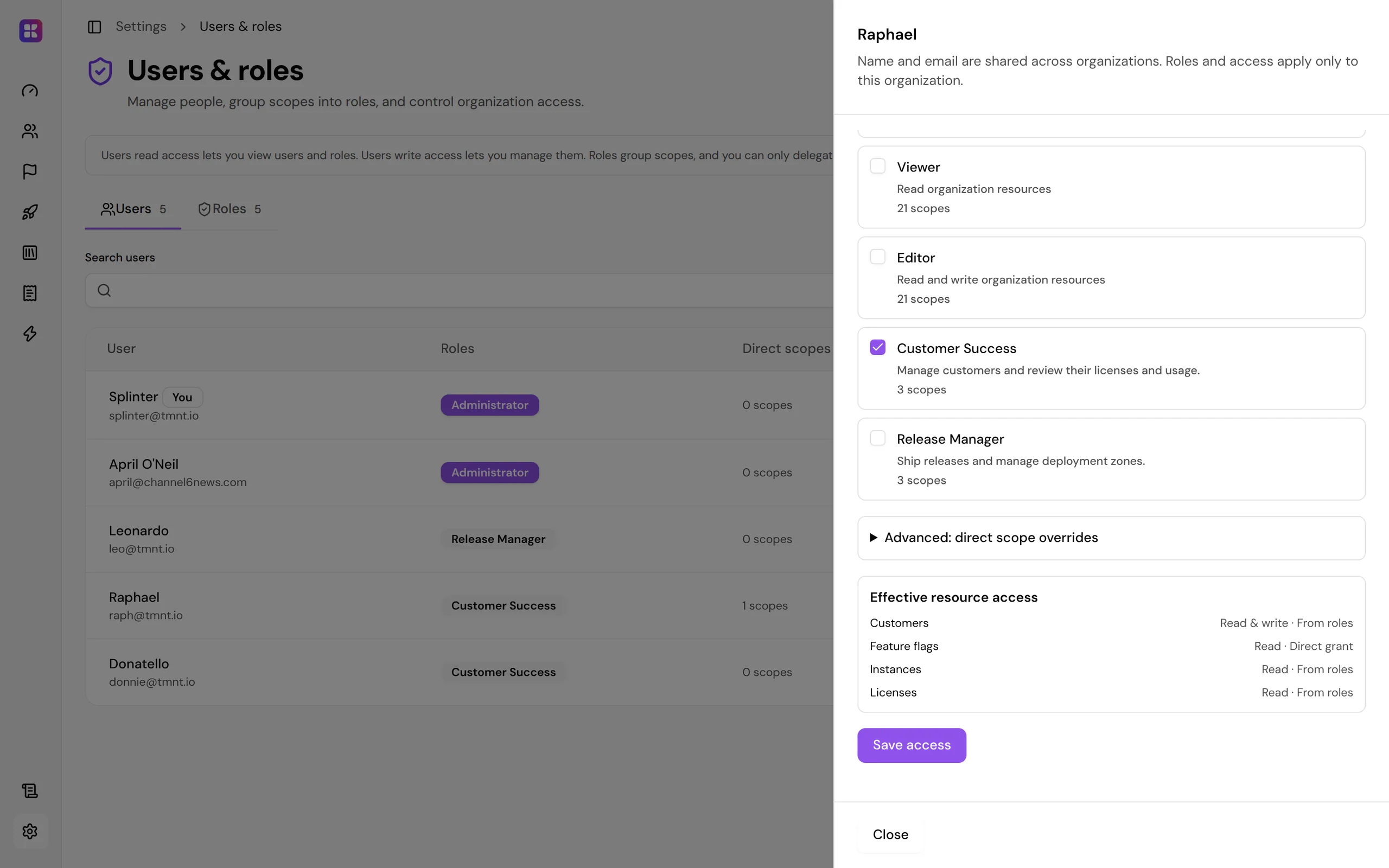
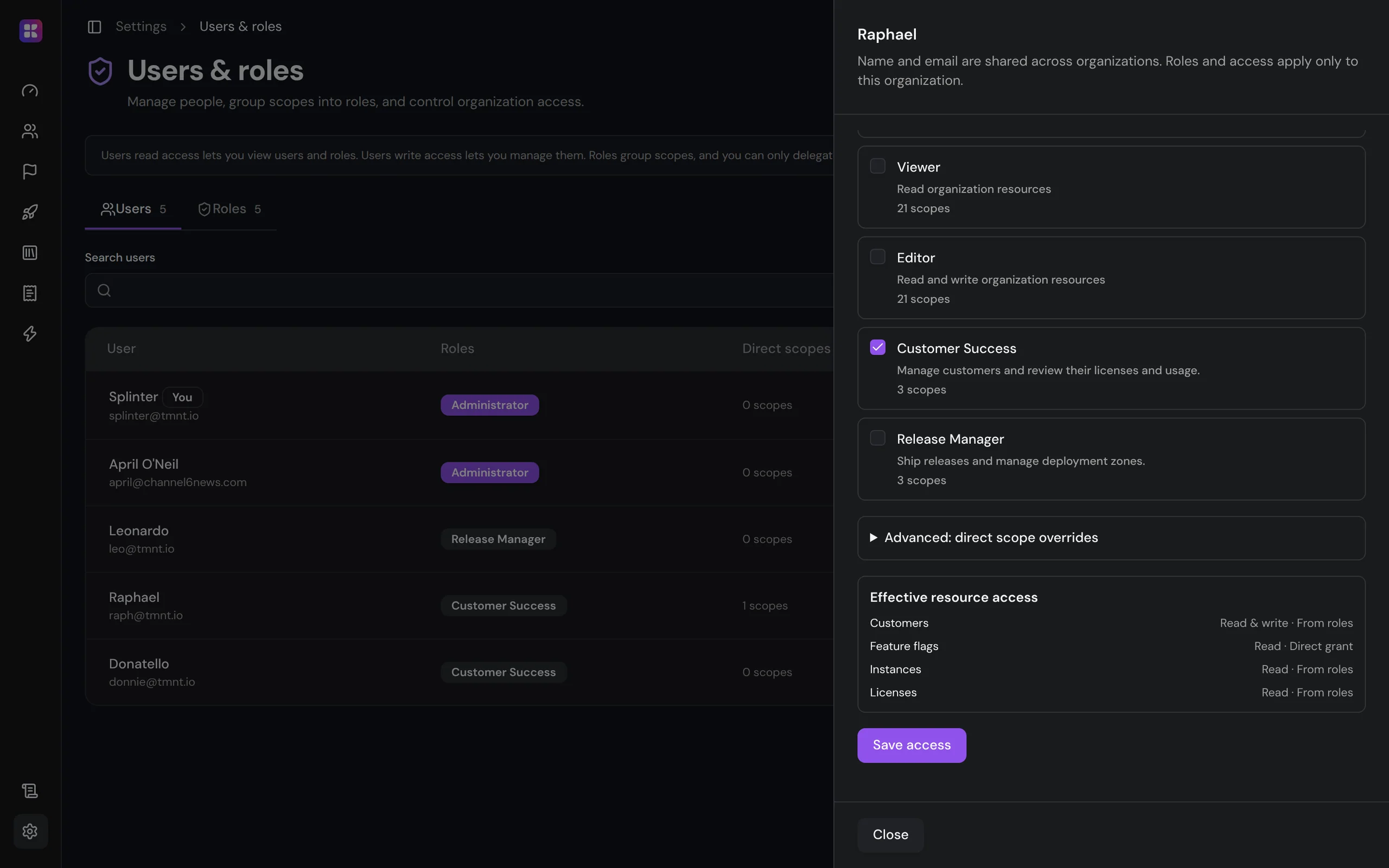
Read the docs → Users & Roles · Scopes
Your pricing page, checkout and portal, in React
@kaitencloud/react and @kaitencloud/react-ui are on npm at 1.0, open source in kaitencloud/sdk-js. The headless core holds KaitenProvider and its four modes, the hooks and the gates; react-ui draws the pricing table, the checkouts, the customer portal and the paywalls on top of it, through one appearance system, and every amount they show comes from the server. The core and each component's unstyled rendering follow semantic versioning; the styled layer is experimental and may change in a minor release.
The video follows a restaurant through them: it picks a License on its vendor's pricing table, buys it with no account, then adds delivery drivers and finds its invoices in its portal.
Read the docs → Embedded Components · Gating · Checkout · Portal & Pricing
Also in this release
- Entitlement exceptions. A dated decision on one entitlement of one Instance, such as SSO for two weeks, that ends on its own, with billing on or off. Docs →
- The usage history. Every accepted usage report of an Instance, with the counter before and after it and its transaction id, exportable as CSV or NDJSON. Docs →
- Idempotent usage reports. A report sent again under the same
Idempotency-Keyis counted once. Docs → - Deleting a voucher never redeemed, from the console or the API. Docs →
This release and the ones before it are on What’s new, newest first.
Try this release on the demo data
One command starts Kaiten on your machine, with the Kaiten Sushi Shop demo data, its billing catalogue and the console. The docs cover each part of this release.